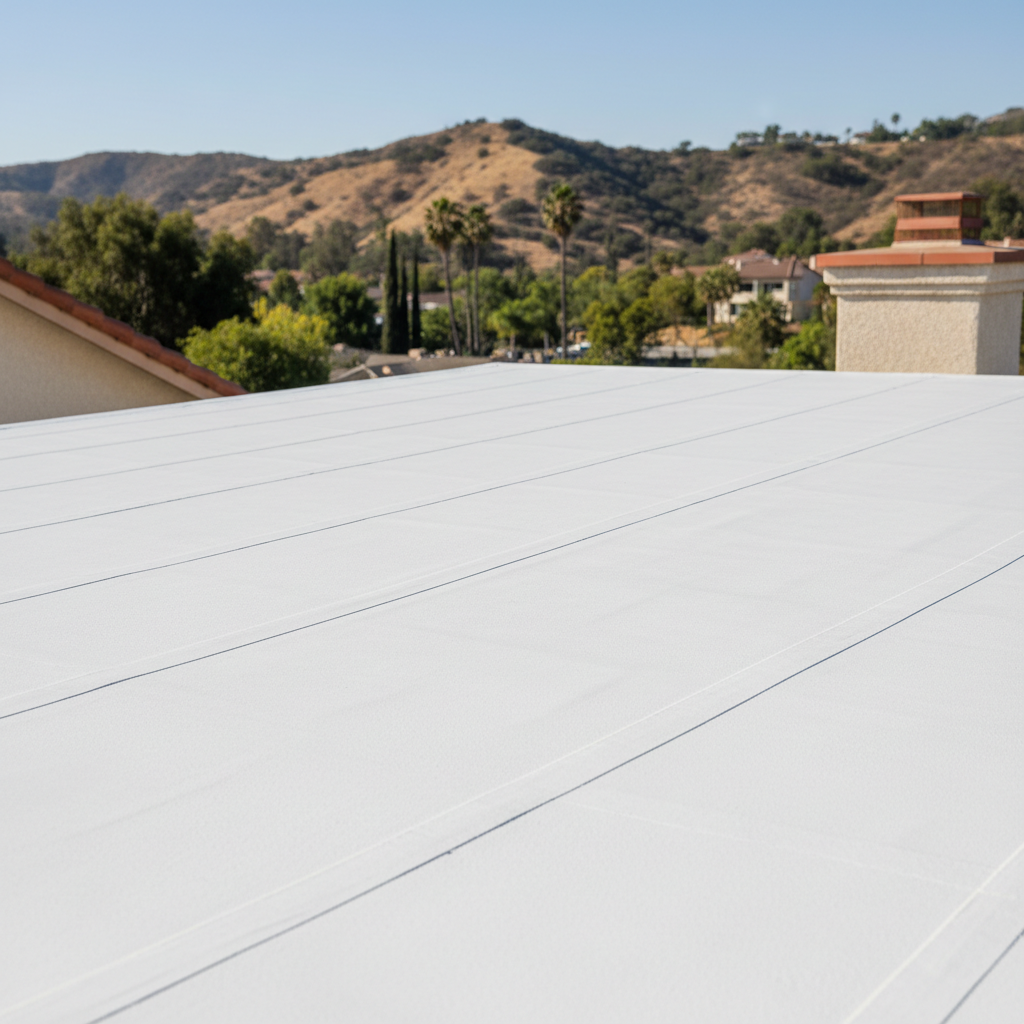
Got a commercial building here in Monterey Park and wondering about TPO roofing? You're not alone. I get a lot of questions about this stuff, and for good reason. It's a popular choice for flat roofs, but there's a lot of misinformation out there. So, I figured I'd tackle the most common questions I hear from folks just like you. Let's get right into it.
What exactly is TPO roofing?
TPO stands for Thermoplastic Polyolefin. Sounds fancy, right? Really, it's just a single-ply membrane. That means it's one layer of synthetic material that we roll out and attach to your roof. It's made from a blend of polypropylene and ethylene-propylene rubber. It's flexible, durable, and comes in big sheets, which means fewer seams on your roof. Fewer seams generally mean fewer places for leaks to start, and that's always a good thing in my book. We've been putting these roofs on buildings all over the San Gabriel Valley for years, and they hold up well.
Is TPO a good choice for flat roofs in our climate?
Absolutely, it's one of the best. Here in Monterey Park, we get a lot of sun, and while our winters aren't extreme, those hot summers can really beat down on a roof. TPO is designed to reflect UV rays, which helps keep your building cooler. That can even lower your energy bills. That's a big deal when you're running AC all summer, isn't it? It's also resistant to punctures, tears, and chemicals, which is important if you've got HVAC units or other equipment on your roof that might get serviced. I've seen TPO roofs stand up to our occasional heavy rains and the constant sun without much fuss.
How long does a TPO roof typically last?
You're looking at a good 15 to 20 years, sometimes even longer if it's installed right and you keep up with basic maintenance. That's a pretty solid lifespan for a commercial roof. The quality of the material, the skill of the installers (that's where Family Roofing comes in), and how well you maintain it all play a part. Don't cheap out on installation; a bad install can cut that lifespan way down, no matter how good the material is.
What kind of maintenance does a TPO roof need?
It's not high-maintenance, which is another plus. Mostly, you want to keep it clean. Debris like leaves, dirt, or anything that can hold moisture on the roof needs to be cleared off regularly. You should also have it inspected once a year, especially after any heavy storms. We'll check the seams, flashing, and around any penetrations (like vents or skylights) to make sure everything's still sealed tight. Catching small issues early prevents them from becoming big, expensive problems later. It's a lot like changing the oil in your car; a little preventative care goes a long way.
Can TPO be repaired if it gets damaged?
Yes, and that's one of its strengths. If you get a puncture or a tear, TPO is relatively easy to patch. We use a heat-welding process to fuse new TPO material directly onto the existing membrane, creating a strong, watertight bond. It's a pretty straightforward repair for an experienced crew. You don't usually need to replace entire sections unless the damage is really widespread. This makes TPO a cost-effective choice in the long run.
Is TPO environmentally friendly?
Compared to some other roofing materials, yes, it has some good environmental benefits. As I mentioned, its reflective surface reduces the urban heat island effect and can lower your building's energy consumption. Many TPO membranes are also recyclable at the end of their life, which is a big plus for reducing waste. Plus, because it lasts so long, you're not replacing your roof as often, which conserves resources. It's not perfect, but it's definitely a step in the right direction.
How much does a TPO roof cost compared to other options?
That's the million-dollar question, right? TPO is generally a very competitive option. It tends to be more affordable than some traditional built-up roofs or modified bitumen systems, especially when you factor in its longevity and energy efficiency. The exact cost depends on a lot of things: the size and complexity of your roof, the thickness of the TPO membrane you choose, and any existing roof removal that needs to happen. But for most commercial property owners in areas like the hilly parts of Monterey Park, where accessibility can sometimes add to labor costs, TPO usually offers a great balance of performance and price. We always provide a detailed quote so you know exactly what you're getting into.
Hopefully, that clears up some of your questions about TPO roofing. It's a solid, reliable choice for commercial properties here in our community. If you've got more questions or want to talk about your specific building, just give us a call at Family Roofing. We're always happy to help.