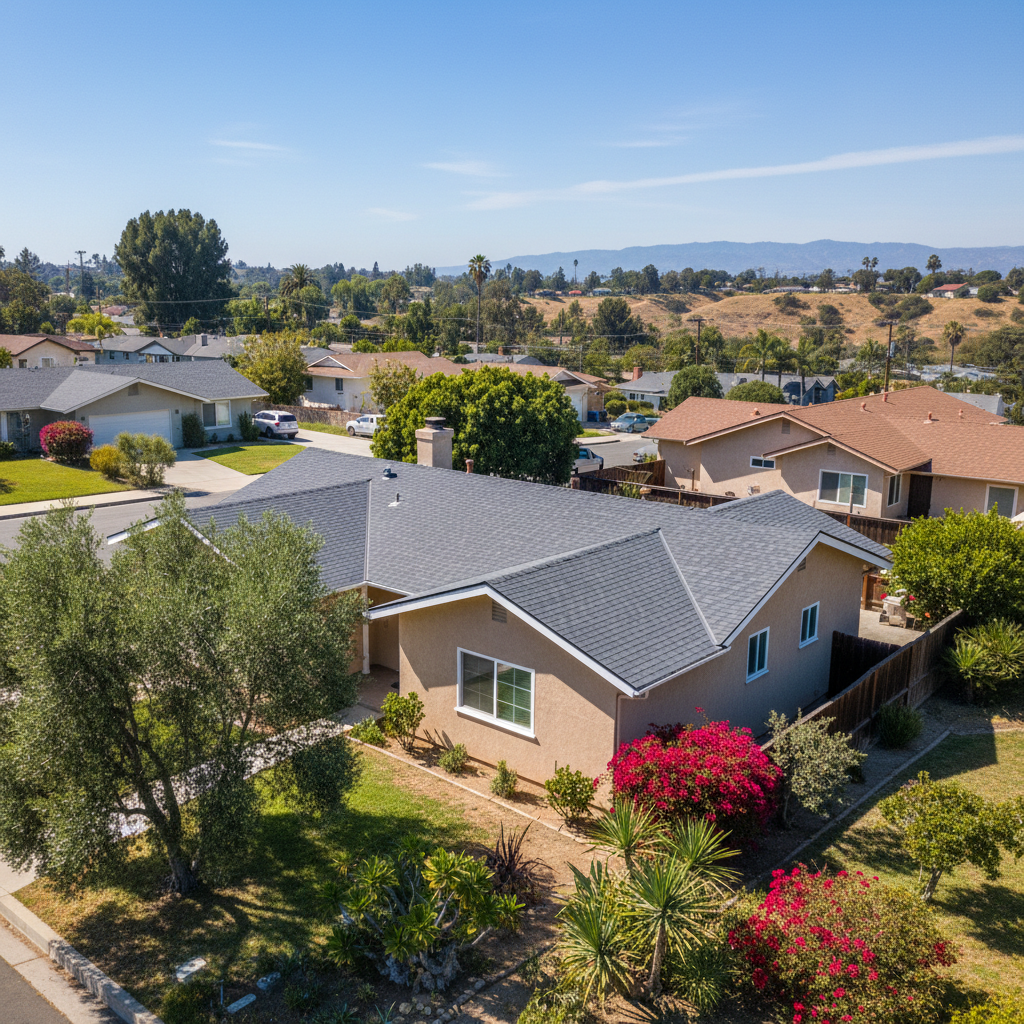
Rooflines change as you drive up from Atlantic Boulevard into the hills around Garvey Ranch. Mid-century ranch homes with low slopes sit next to older properties with steeper pitches and decades of layered architectural history. Working on these houses is not like putting shingles on a cookie-cutter suburban tract build out in the Inland Empire. Monterey Park has its own rhythm, and if your contractor does not know the local housing stock, you will run into problems.
Most homeowners do not think about what is happening underneath their shingles until a leak shows up on the drywall. But out here, our local climate puts a specific type of stress on a roof. We get those blistering San Gabriel Valley summer heatwaves that bake asphalt shingles down to gravel, followed by sudden downpours when winter arrives. If your attic is not venting right, that trapped heat cooks the decking from the inside out.
Family Roofing sees the same issues pop up over and over in neighborhoods near Repetto Elementary or down toward Atlantic Times Square. Many homes built back in the fifties and sixties have original wood plank decking that has dried out over the decades. When we strip off the old layers—sometimes three deep, which builders used to get away with back then—we often find the underlying wood is spongy or warped. You cannot just nail new shingles onto compromised wood and hope for the best. You need a solid deck to hold those fasteners, especially when the Santa Ana winds come howling through the canyon passes.
What to Look For Before Calling a Pro
You can usually tell when your roof is reaching the end of its lifespan without climbing up a ladder yourself. Just grab a pair of binoculars and check out a few key areas:
- Granules collecting heavily in your gutters or downspouts after a rare rain
- Curling or buckling shingle edges, particularly on the south-facing slopes that take the brunt of the afternoon sun
- Sagging rooflines along the ridge, which usually points to overloaded framing or rotted rafters
- Staining on your upstairs ceilings or damp insulation in the attic space
Ignoring these signs usually leads to structural damage that costs much more than a straightforward replacement. Moisture gets into the framing, attracts termites, and before you know it, a simple shingle swap turns into a major carpentry project.
Choosing the right materials matters just as much as the installation quality. Lighter cool-roof colors are becoming the standard around here because the city and state energy codes push for better thermal performance. They reflect that intense Southern California sun instead of absorbing it, which keeps your air conditioner from running constantly July through September.
When you are ready to get quotes, make sure the crew actually gets up on your roof and goes into your attic. If someone gives you a price just by looking at satellite maps, they are guessing. Every Monterey Park street has its own quirks, from tight driveway access on hillside lots to specific homeowner association rules in newer developments. Get someone out there who knows the local building codes inside and out, and you will not have to worry about your roof for the next thirty years.